
Centering the Child: What Sustains the Adults
- Wildflower Schools
- 3 days ago
- 2 min read



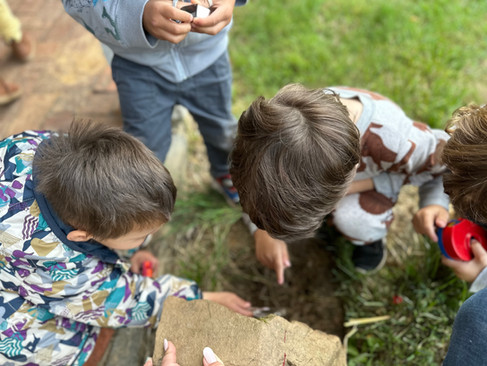
Tommy's story answers what it looks like to follow the child when everything in you wants to give up. But how do two people sustain this kind of work — constant observation, flexibility, release of control — without burning out?
For Leah and Kirsti, the answer comes down to two things: the structure they work inside, and their partnership.
First: agency
None of what happened with Tommy would have been possible if Leah and Kirsti lacked the authority to act on what they observed—immediately.
Spicebush is part of Wildflower Schools, a network that puts teachers, not administrators, in authority over how learning is shaped for each child. When Leah identifies an issue, she creates a plan and executes it. At previous schools, she couldn't dim the overhead lights because it affected the look of tours. She couldn't extend recess when the weather was beautiful. A sensory room would have required a committee.
There's an under-appreciated cause of burnout: seeing exactly what a child needs and being unable to provide it. Helplessness, dressed up as protocol, can drain people fast. Having the authority to respond to what you observe changes everything.
Then: each other
Sustaining this work starts with yourself. You have to know your own triggers and limits, name them honestly, and learn to see them differently. For Kirsti, that means recognizing a whining child not as an annoyance but as a young child's way of soothing. For Leah, a sudden loud noise, a disengaged child, messes left for someone else. You can't work with what you haven't named.
But self-awareness alone isn't enough. You need someone to bring it to.
Early on, Leah and Kirsti invested in a therapist, not for the children, but for themselves. For their working relationship. They learned how each of them wants to be spoken to, how to surface hard truths without eroding trust, and how to keep showing up for each other through the weeks that are genuinely difficult.
From that foundation, they built shared systems. When the classroom gets too hot for one of them, they tap out — no explanation needed, just a swap. Every Friday, aftercare is canceled — by design, with families' full support — for an honest staff meeting: what's working, what isn't, what does each person need. Throughout the day, they take small pauses: cold water on the face, five deep breaths, a moment of stillness. They take care of themselves so they can take care of the children.
"The way we reflect on our own needs with each other— where am I strong, where do I need support — that's the same framework we use for the kids," Kirsti says. "Because we practice it ourselves, we can actually apply it."
The whining starts again, loud and insistent. Kirsti feels it rise in their chest. They pause. Take a breath. And because Leah knows — really knows — she's already moving. Within minutes, the room softens. Not because the noise disappeared, but because no one had to face it alone.
Note: Student names have been changed to protect privacy